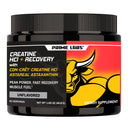
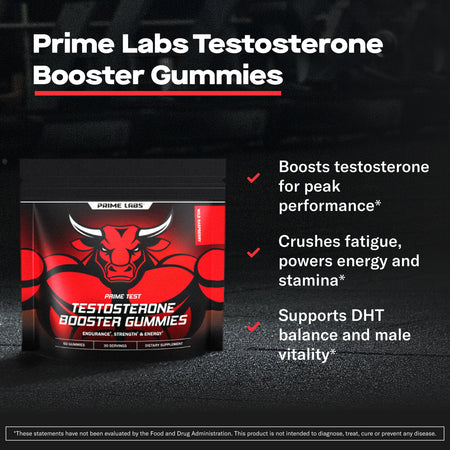
Prime Labs Creatine bottle, black label with yellow bull logo reading 5g creatine per serving — choosing the best creatine for men
Creatine and Strength

Best Creatine for Men: How to Choose the Right One

THE SHORT VERSION: No single creatine is “best” for every guy — but for most men who train, monohydrate is the smart pick: most-studied, most-proven, most economical.[1] Want a smaller dose or something easier on the stomach? HCl is a solid call.[2] We make both. Here's the honest criteria.

What makes a creatine the “best” one?

Forget the flashiest tub on the shelf. The best creatine is a proven form, an effective dose, and one you'll actually take every day.

Supplement brands love selling the newest “advanced” creatine. The evidence keeps landing in the same place: the fundamentals beat the gimmicks, every time.[3] Here's what actually moves the needle for a guy who trains.

  • A proven form. Monohydrate has the deepest evidence base by a mile; HCl is a well-tolerated alternative.[1]
  • An effective dose. Enough creatine per serving to actually saturate your muscles — not a sprinkle buried in a blend.
  • Third-party testing & a transparent label. You should see exactly how much creatine you're getting.
  • A format you'll stick with. Capsule or powder — the best creatine is the one you take daily.

The best creatine for most men: monohydrate

Want the safe bet? Take monohydrate. It's the most-researched form in all of sports nutrition and the benchmark every other form gets measured against.[1]

Decades of trials back monohydrate for supporting strength, power, and lean mass when you put in the training*.[1] It's also the cheapest per serving. For the vast majority of men, it's all the creatine you'll ever need.

The best creatine for a smaller dose or a sensitive stomach: HCl

If big scoops of monohydrate sit heavy, or you just want a smaller dose, go HCl.

HCl is far more water-soluble than monohydrate — roughly 38× more in lab testing — so it dissolves in much less liquid and doses smaller.[2] That's a convenience-and-comfort edge, not a bigger result: no form has been shown to out-perform monohydrate.[3]

What to look for on the label

Once you've picked a form, the label tells you the rest:

  • A clearly stated creatine dose — not hidden inside a proprietary blend.
  • Third-party testing for purity and label accuracy.
  • A clean ingredient list without junk fillers.
  • A form you recognize — monohydrate or HCl, both well-studied.
Written by the Prime Labs Editorial Team · Reviewed against our Editorial Methodology.

Prime Labs creatine — both forms

We build creatine in three formats so you can match it to your training:

  • Creatine Capsules — pure monohydrate at the full 5,000 mg clinical dose; the proven, economical default in a grab-and-go capsule.*
  • Creatine HCl+ — CON-CRĒT® creatine HCl with Rhodiola and L-Theanine for endurance and calm, focused energy in a smaller, fast-mixing dose.*
  • Creatine HCl + Astaxanthin Powder — CON-CRĒT® HCl paired with clinically studied AstaReal® astaxanthin for added recovery and antioxidant support after hard training.*

Whichever you run, take it daily and let the work do the rest.

FAQs

What is the best type of creatine?
For most men, creatine monohydrate — it’s the most-studied, most-proven, and most economical form.[1] HCl is a strong alternative if you want a smaller dose.
Is expensive creatine better?
Not necessarily. Newer “advanced” forms cost more but haven't been shown to beat plain monohydrate on results.[3] Pay for a proven form, an effective dose, and third-party testing — not novelty.
Does the brand matter?
What matters is a transparent label, an effective dose, and third-party testing. Past that, pick a format you'll take consistently.

References

  1. Kreider RB, Kalman DS, Antonio J (2017). International Society of Sports Nutrition position stand: safety and efficacy of creatine supplementation in exercise, sport, and medicine. Journal of the International Society of Sports Nutrition, 14:18.
  2. Gufford BT, Sriraghavan K, Miller NJ (2010). Physicochemical characterization of creatine N-methylguanidinium salts. Journal of Dietary Supplements, 7(3), 240–252.
  3. Antonio J, Candow DG, Forbes SC (2021). Common questions and misconceptions about creatine supplementation. Journal of the International Society of Sports Nutrition, 18(1):13.

*These statements have not been evaluated by the Food and Drug Administration. This product is not intended to diagnose, treat, cure, or prevent any disease.