

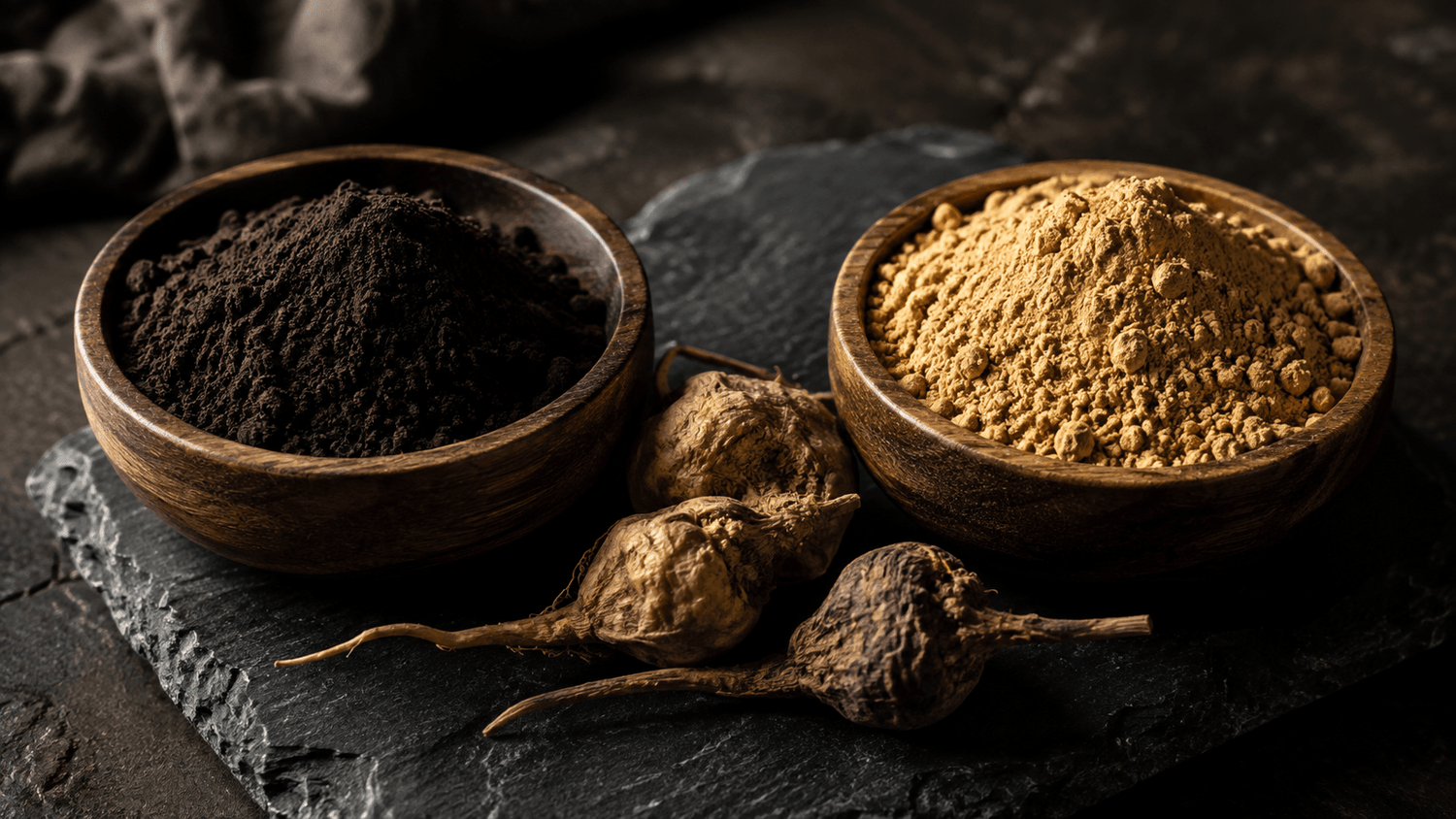
THE SHORT VERSION — Black maca and regular (yellow) maca come from the same plant, Lepidium meyenii, but differ by root color. Black maca is the rarest phenotype and the variety most often studied for energy and stamina — though human research is still limited and preliminary.
How do the maca types differ?
| Type | Availability | Traditional emphasis |
|---|---|---|
| Yellow | Most common | General daily tonic |
| Red | Moderate | Explored for mood and prostate health in some trials |
| Black | Rarest | Energy, stamina, and focus in early studies |
The color reflects the natural phenotype of the root — not processing or added ingredients. Peruvian growers have cultivated all three for centuries at high altitude, and researchers have begun studying whether the phenotypes differ meaningfully in effect. [1]
Does black maca do anything the others don't?
Early studies have focused on black maca for energy, stamina, and focus, which is why it commands attention (and a premium). [1][2] But the research base is small, and no phenotype has large human trials behind it. Treat maca as a traditional food-based supplement with promising early research, not a proven performance enhancer.
Why sourcing matters with black maca
Because black maca is scarce, it's often blended or mislabeled. Look for single-origin, high-altitude Peruvian maca with authenticity testing. Our Organic Black Maca is grown in Peru and tested for authenticity.
References
- Gonzales GF (2012). Ethnobiology and Ethnopharmacology of Lepidium meyenii (Maca), a Plant from the Peruvian Highlands. ncbi.nlm.nih.gov/pmc/articles/PMC3184420
- Examine.com. Maca: research summary. examine.com/supplements/maca
These statements have not been evaluated by the Food and Drug Administration. This product is not intended to diagnose, treat, cure, or prevent any disease.