THE SHORT VERSION: PrimaVie® is a branded, purified shilajit extract, and it's the one used in the main human trials. Those studies are the best available evidence for purified shilajit as an ingredient. They aren't a guarantee for any specific product, and that includes ours. When you compare shilajit supplements, look at purification, the disclosed dose, standardization, and testing, not only the name on the label.
If you've researched shilajit for more than ten minutes, you've run into PrimaVie. It shows up in study abstracts, podcast talking points, and a lot of product pages. This guide explains what PrimaVie is, what the research on it shows, and how to read "clinically studied" claims so you know what you're buying. We make shilajit supplements, so we'll also be upfront about how ours fits in.
What Is PrimaVie Shilajit?
PrimaVie® is a branded, purified, and standardized shilajit extract made by the ingredient company Natreon. It's the extract used in the most-cited human shilajit trials.[1][2][3]
"Standardized" means each batch is processed to hit set levels of specific compounds. In the testosterone trial, the extract was described as at least 60% total bioactives, including at least 50% fulvic acids and at least 0.3% dibenzo-α-pyrones (DBPs).[1] Fulvic acids are organic compounds formed from decomposed plant matter. DBPs are antioxidant compounds researchers link to how shilajit acts in cells. The muscle-tissue study described processing that reduced heavy metals to safe levels.[3]
In short, PrimaVie is purified shilajit made to a spec. A consistent material makes for a cleaner study, which is one reason it anchors the research.
What Did the PrimaVie Studies Find?
Three human studies, three findings. Here's what each one tested and found.
Testosterone (90 days): healthy men aged 45–55 took 250 mg twice daily. Compared with placebo, they showed significantly higher total and free testosterone and DHEA-S, while LH held steady.[1] That supports healthy testosterone levels within the normal range.*
Strength under fatigue (8 weeks): recreationally active men took 250 mg or 500 mg daily. At 500 mg, they retained more strength after a fatiguing leg workout, and a subgroup showed lower levels of a collagen-breakdown marker.*[2]
Muscle tissue (8 weeks, open-label, no placebo): overweight adults took 250 mg twice daily. Muscle biopsies showed more activity in genes tied to collagen and the extracellular matrix, the scaffolding that holds muscle together.[3]
For the full evidence picture, including what's still unproven, see Shilajit Benefits for Men: What the Evidence Supports.
What Does "Clinically Studied" Actually Mean?
It means an ingredient has been tested in human trials. It doesn't mean every product containing that ingredient, or anything like it, has been proven to work.
"Clinically studied" and "clinically proven" aren't the same thing, and the gap matters. A study shows what happened to a specific group of people, taking a specific material at a specific dose for a specific length of time. The testosterone trial, for example, studied healthy men aged 45–55 for 90 days.[1] Those findings are ingredient-level evidence. They're the best guide to what purified shilajit can do at research doses, but they aren't a product guarantee.
Keep the full context in mind too. The testosterone and strength trials were funded by the extract's manufacturer.[1][2] A U.S. Department of Defense review notes that shilajit's human research is limited to a few small studies, some of them industry-funded.[4] That doesn't erase the findings. It means you should read them as promising, not settled.
Can Other Shilajit Products Use PrimaVie Research?
Only as ingredient-level context, and a credible brand says so. Research on one purified extract tells you about purified shilajit at that dose. It doesn't automatically carry over to a different material.
Shilajit composition varies a lot by source and processing.[5] Counterfeit and adulterated products are also sold under the name.[6] So when a product points to "the research," ask three questions.
Is it purified? The trials used purified extract, not raw pitch.
Is the dose research-aligned? The trials used 500 mg a day in total.
Is it standardized and tested? A stated fulvic acid level and third-party testing are the minimum.
A product that clears all three is built on the same principles as the research material. A product that clears none of them is just borrowing a study.
How Does Prime Labs Shilajit Compare?
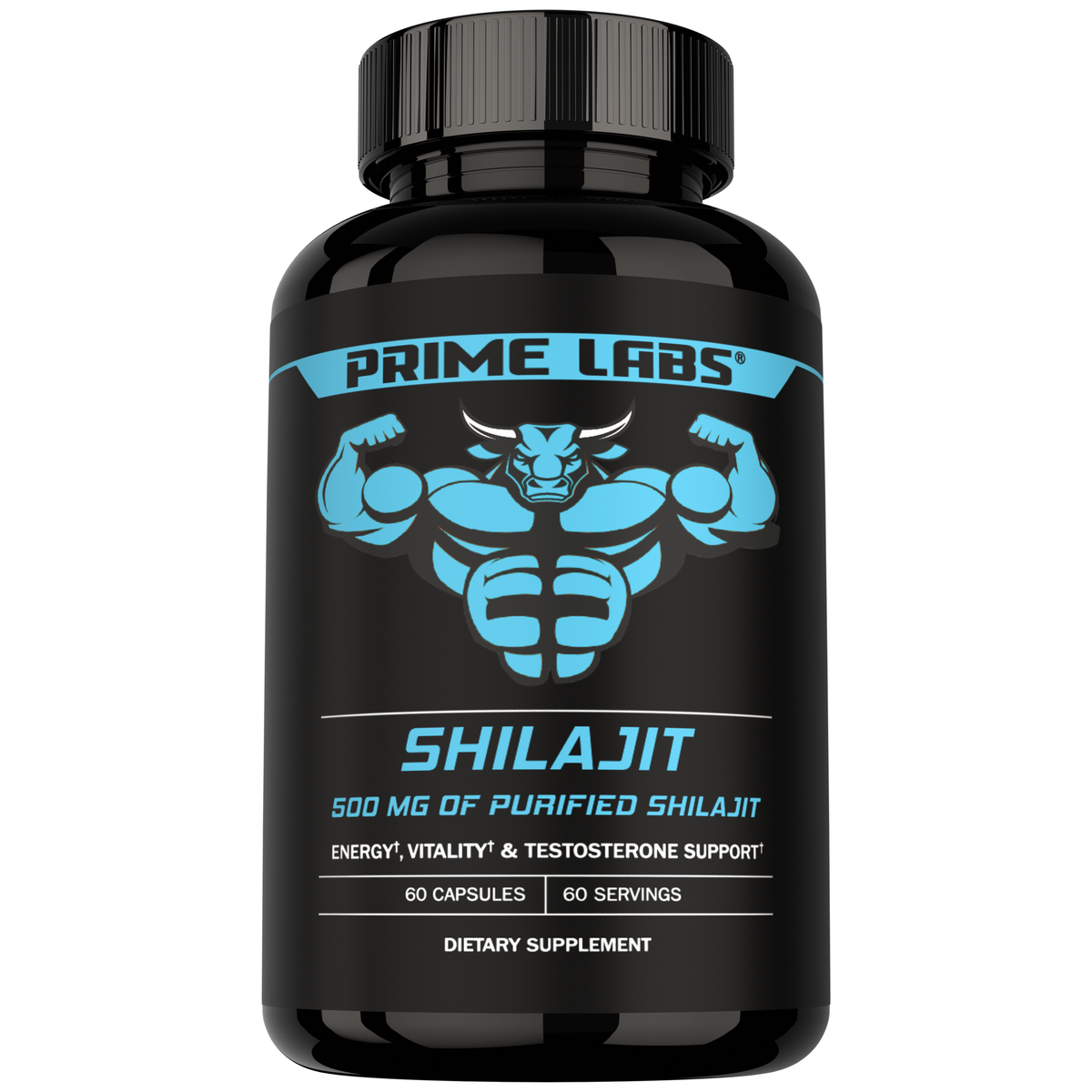
Prime Labs Shilajit is purified Himalayan shilajit, not PrimaVie, and we built it to the same principles the research rewards.
Purified: sourced from high-altitude Himalayan mineral deposits and put through multi-stage purification.
Research-aligned dose: 500 mg per capsule, once a day. That's the same daily amount used in the published trials.[1][2]
Standardized: 20% fulvic acid, stated on the label. PrimaVie is standardized higher.
Tested: third-party tested, one ingredient, no proprietary blend.
It matches the 500 mg daily amount used in those trials. Because it's a different extract with a lower fulvic acid standardization, the trial results are evidence for purified shilajit, not a guarantee for our product. Results may vary.
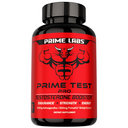
Want PrimaVie specifically? We use 500 mg of PrimaVie® inside our multi-ingredient Prime Test Pro formula. For a single-ingredient shilajit, Prime Labs Shilajit is the one we make.
What Should You Look for Beyond the Ingredient Name?
Look at the label, not the logo. A recognizable ingredient name is a starting point, not a quality guarantee.
The FDA doesn't approve supplements before they're sold. Manufacturers are responsible for making sure products aren't adulterated or mislabeled, and for following current good manufacturing practices.[7] The NIH also cautions that words like "standardized," "verified," or "certified" don't guarantee quality on their own.[8] So check the specifics: a disclosed shilajit dose, a stated standardization, evidence of third-party testing, and no proprietary blend. Our full checklist is in Best Shilajit Supplement: 6 Quality Markers That Matter.
How Should You Read a Shilajit Study?
Ask five questions before you let a study sell you anything: who, how many, how much, how long, and who paid.
Who was studied? The testosterone trial enrolled healthy men aged 45–55.[1] The strength trial studied recreationally active young men.[2] The muscle-tissue trial studied overweight adults.[3] Results in one group don't automatically apply to another.
How many people? 75 men completed the testosterone trial, 63 took part in the strength trial, and 16 in the tissue study.[1][2][3] Those are small numbers, fine for early evidence but not the last word.
How much, and what? 500 mg a day of a purified, standardized extract.[1][2] A different dose or a raw material is a different experiment.
How long? 8 to 12 weeks. Short-term findings don't tell you about years of use.[4]
Who paid? Industry funding is common and disclosed here.[1][2] It's a reason to want replication, not a reason to dismiss the data.
Run any "clinically studied" claim through those five questions and you'll know exactly how much weight it can carry.
Why Does Standardization Matter So Much?
Because shilajit isn't one uniform substance. Standardization is how a manufacturer makes batch 50 behave like batch 1.
Shilajit's chemistry changes with the mountain it came from, the altitude, and the environment around it.[5] Without standardization, two bottles of the same product could deliver different amounts of fulvic acids and other compounds. A stated standardization, such as a fulvic acid percentage, is a manufacturer's commitment to consistency. That's why the research extract was built to a spec.[1] It's also why we print our 20% fulvic acid standardization on the Prime Labs Shilajit label.
PrimaVie® is a registered trademark of Natreon, Inc. Prime Labs Shilajit is not made with PrimaVie®.