
THE SHORT VERSION: Resin and capsules both start as the same raw material. What separates them is how precisely you can dose each one and how easily each can be verified. A capsule gives you the same 500 mg every day, which is the daily amount used in human research. If you care about consistency, a purified, standardized capsule is the more reliable way to take shilajit.
Search "shilajit" and you'll see two camps. Resin purists swear by the traditional paste. Everyone else takes a capsule and gets on with their day. We'll walk through what resin is, how the two forms compare, and what actually matters when you choose.
What Is Shilajit Resin?
Shilajit resin is the traditional form: a thick, tar-like paste made from mineral pitch that seeps from high-altitude rock.[1] You scoop a small amount, dissolve it in warm water or tea, and drink it.
Traditional preparations were typically taken mixed with milk or other substances.[1] Modern resin is sold in small jars with a tiny spoon, and it's usually described as purified pitch that's been dried back down to a paste. What you're drinking is the same class of material found in capsules: fulvic acids (organic compounds formed from decomposed plant matter), dibenzo-α-pyrones (antioxidant compounds), and minerals such as potassium, calcium, and magnesium.[2]
The difference is what happens after processing. Resin stays a paste. Capsules take purified shilajit, measure it, and seal it into a fixed dose.
Is Resin More Effective Than Capsules?
No study shows that. There's no published head-to-head research comparing resin with capsules, so any claim that one form "absorbs better" is marketing, not evidence.
What the research does tell us is which kind of shilajit produced results. The human trials used a purified, standardized extract, given as measured doses of 250 mg twice daily or 500 mg once daily for 8 to 12 weeks.[3][4][5] That's a capsule-style protocol: a known amount, taken consistently. The effects people care about, like supporting healthy testosterone within the normal range and retaining strength under fatigue, came from that protocol: a purified, standardized extract taken consistently.*[3][4]
So the useful question isn't which form is more effective, it's which form lets you repeat what worked in the research.
Resin vs Capsules: How Do They Compare?
Capsules win on precision, convenience, and verifiability. Resin wins on tradition. Here's the side-by-side.
| Factor | Resin | Capsule |
|---|---|---|
| Dose accuracy | Measured by eye ("pea-sized") | Fixed amount per capsule |
| Matches research protocol | Hard to replicate precisely | 500 mg daily, as in the strength research |
| Taste | Strong, bitter, earthy | None |
| Prep time | Dissolve in warm liquid | Swallow with water |
| Portability | Sticky, temperature-sensitive | Gym bag friendly |
| Standardization on label | Varies widely | Commonly stated |
Why Does Dose Accuracy Matter So Much?
Because shilajit works over weeks, and the research effects came from consistent daily amounts. Guessing every morning undercuts that.
A "pea-sized" scoop isn't a unit. It changes with the spoon, how warm the jar is, and how dense that batch happens to be. One day you're under, the next day you're over. Short-term use at up to 500 mg a day is considered possibly safe, and long-term data are limited.[6] That's a good reason to know exactly how much you're taking instead of estimating.
A capsule removes the guesswork. One 500 mg capsule is 500 mg, every day, which is the daily amount used in the strength and muscle research.[4][5] For the full dosing picture, see Shilajit Dosage: How Much Should Men Take Daily?
Which Form Is Easier to Verify for Purity?
The one with a standardized, tested, clearly labeled dose. That's easier to deliver in capsule form.
Shilajit's biggest real risk is contamination. The raw material can carry heavy metals such as lead, arsenic, cadmium, and mercury, and only lab testing can confirm what's in a batch.[6] Adulterated and counterfeit products are also sold as shilajit.[2] A 2025 analysis found thallium in both raw shilajit and finished supplements, so no format is automatically safe. Testing is what matters.[7]
This is where format helps. A capsule product lists an exact milligram amount and a fulvic acid standardization on the Supplement Facts panel, and you can hold the brand to both. Resin is sold in every grade from lab-tested to "straight from a market stall," and the jar often can't tell you which one you've got. Popular home checks like the flame test or water test can't detect metals either. We break those down in Best Shilajit Supplement: 6 Quality Markers That Matter.
Why Do Some People Still Prefer Resin?
Ritual, mostly. Resin is the traditional preparation, and for some people dissolving it in a warm drink is part of the appeal.
That's a fair preference, and we're not here to knock it. Shilajit has been taken this way in Ayurveda for centuries as a rasayana, a rejuvenating tonic.[1] But tradition doesn't settle the practical questions. How much did you take today? Was the batch tested? Will you drink it every day for twelve weeks straight? For most men balancing training, work, and home life, a measured capsule is the easier call.
What Should You Look for in a Shilajit Capsule?
A capsule is only as good as what's inside it. Hold any shilajit capsule to these standards:
Purified shilajit, not raw. The human research used purified extracts.[3][4]
A disclosed dose. One clear milligram amount, ideally 500 mg a day to match the research.
A stated fulvic acid standardization, so you know it was measured.
Third-party testing, not just a manufacturer's promise.
No proprietary blend. You should know exactly how much shilajit you're taking.
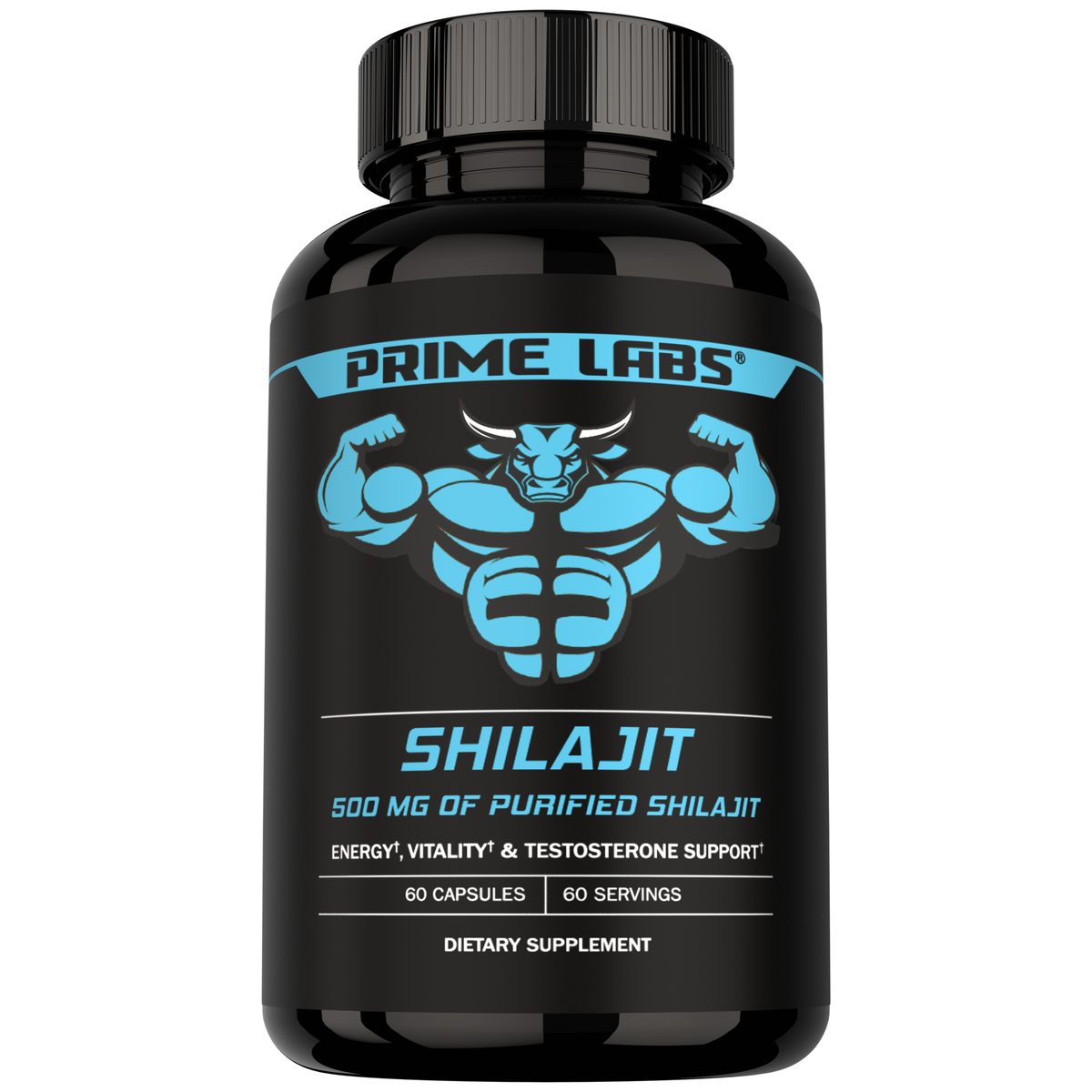
That's the brief we built Prime Labs Shilajit around: 500 mg of purified Himalayan shilajit per capsule, standardized to 20% fulvic acid, and third-party tested.
How Do You Take Shilajit Capsules?
Keep it simple. Take one capsule a day with water, ideally with a meal.
Morning: with breakfast, to build the habit.
Pre-training: 30–60 minutes before your workout.
Evening: with dinner, if that's when you're most consistent.
Pick one time slot and stick with it. Consistency over 8 to 12 weeks is what the research rewarded.[3][4] If you take prescription medication or have a medical condition, check with your doctor first.[8]
What Does "Purified" Mean for Resin and Capsules?
Purification is the step that turns raw mineral pitch into something worth taking, whether it ends up as resin or in a capsule. Raw shilajit is dissolved, filtered to remove insoluble debris, and concentrated back down.
That process matters more than the final format. Raw shilajit's composition varies with where it was collected, and it can carry heavy metals picked up from the rock.[1][6] A shilajit safety review recommends standardized, processed preparations over raw material for exactly that reason.[2] While some resin sold online is purified and tested, some is barely processed at all. With a capsule, the Supplement Facts panel at least commits the brand to a stated amount and standardization you can check.
Raw resin: minimally processed. Composition and contaminants are unknown without testing.
Purified resin: processed, then dried back to a paste. Dose is still measured by eye.
Purified capsule: processed, standardized, and measured into a fixed dose.
How Do You Switch From Resin to Capsules?
Stop the resin and start one 500 mg capsule a day with a meal. No overlap needed.
Because resin doses are estimates, don't try to "match" your old scoop. Reset to the research-aligned 500 mg and hold it there.[4] Take it at the same time you used to take your resin so the habit carries over. Give it the full 8 to 12 weeks before you judge the switch, since that's how long the research ran.[3][4]
Finish or set aside the resin. Don't take both on the same day.
Take one capsule daily with water and a meal.
Keep your time slot: morning, pre-training, or evening.
Track consistency, not day-to-day feel. Shilajit works over weeks.
Is Resin or a Capsule Better Value?
Compare cost per verified 500 mg dose, not cost per jar. A cheap jar isn't a bargain if you can't tell how much shilajit you're getting or whether it was tested.
Resin jars are sold by weight, and a jar weight tells you nothing about standardization or purity. A capsule bottle tells you exactly how many 500 mg servings you're buying. When you factor in dose accuracy, testing, and the servings you'll actually take, a standardized capsule is usually the easier value to calculate and the easier one to trust.